Hot summers expose weak garden borders fast. Plants wilt. Soil cracks. Water bills rise. Many gardeners assume lush borders require constant irrigation, but that is not true.
A drought-tolerant garden border can stay colorful, structured, and healthy even during long dry spells. The key is choosing the right plants, improving soil structure, and designing for water efficiency from the beginning.
This guide explains exactly how to build a resilient summer border step by step. You will learn plant selection strategies, layout principles, soil preparation methods, and maintenance routines that reduce watering without sacrificing beauty.
What Is a Drought-Tolerant Garden Border and Why Does It Work?
Snippet Answer: A drought-tolerant garden border uses deep-rooted plants, moisture-retentive soil preparation, and spacing strategies that reduce evaporation and irrigation needs. By selecting resilient species and improving drainage balance, gardeners create borders that remain attractive and productive through extended summer heat with minimal watering.
Answer Block: A drought-tolerant garden border combines water-efficient plants, improved soil structure, mulch coverage, and smart spacing to reduce evaporation and irrigation demand. These borders survive summer heat by storing moisture underground and relying on plants adapted to dry environments instead of thirsty ornamental species.
Traditional borders often depend on shallow-rooted flowering plants that require frequent watering. During heatwaves, these plants struggle because moisture evaporates quickly from the soil surface.
Drought-tolerant borders function differently. They rely on species that store water in roots or leaves and develop deeper root systems capable of accessing underground moisture reserves.
Design structure also plays an important role. Layering taller plants behind shorter groundcovers shades the soil and reduces evaporation rates.
Mulch creates another protective barrier. Organic mulch keeps roots cool while improving soil moisture retention.
Over time, these borders become self-supporting ecosystems that require less irrigation each season.
Which Plants Are Best for a Summer Drought-Resistant Border?
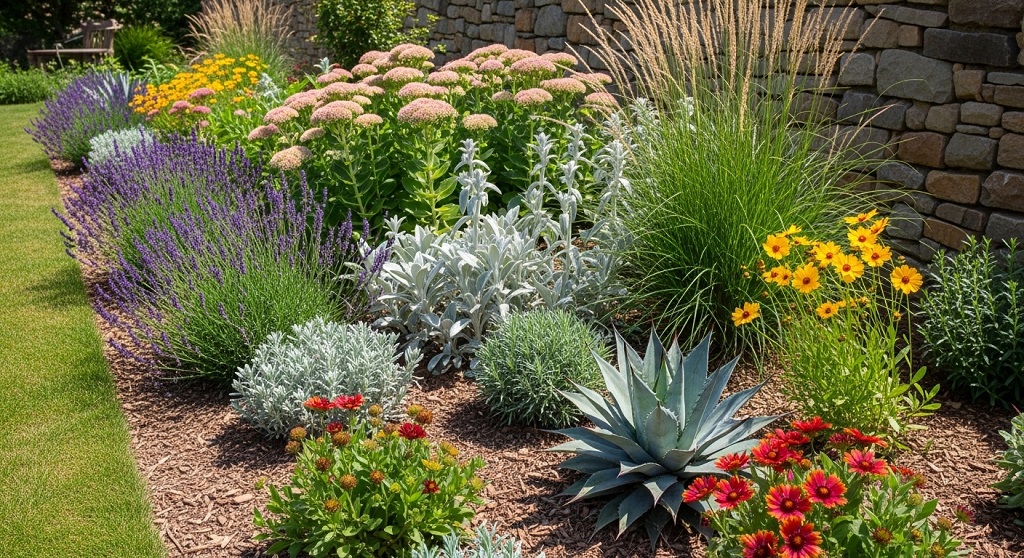
Answer Block: The best drought-tolerant border plants include lavender, salvia, yarrow, sedum, ornamental grasses, echinacea, and rosemary because they develop deep roots, conserve moisture efficiently, and maintain structure during prolonged heat without frequent watering.
Plant selection determines whether your border survives summer or collapses under heat stress. Choose species adapted to dry climates instead of moisture-demanding annuals.
Reliable drought-tolerant border plants include:
- Lavender for fragrance and pollinator attraction
- Salvia for vertical color spikes
- Yarrow for flat flower clusters
- Sedum for succulent moisture storage
- Echinacea for long seasonal blooms
- Ornamental grasses for airflow and movement
- Rosemary for evergreen structure
These plants survive because they evolved in dry Mediterranean or prairie climates.
Combining evergreen shrubs with flowering perennials ensures year-round structure even outside bloom cycles.
Mixing textures also improves visual impact without increasing watering requirements.
How Should You Prepare Soil for a Low-Water Border?
Answer Block: Preparing drought-tolerant border soil requires improving drainage while increasing organic matter content. Mixing compost and coarse sand creates a structure that stores moisture deep underground while preventing surface evaporation and root rot during intense summer heat.
Soil preparation determines whether roots reach stored moisture or remain trapped near the surface.
Start by removing compacted soil layers. Hard soil prevents deep root penetration and traps water near the surface where evaporation happens quickly.
Next, incorporate compost into the top 20–25 cm of soil. Compost increases microbial activity and improves moisture retention without causing waterlogging.
In clay-heavy soil, mix coarse sand or grit to improve drainage speed.
In sandy soil, increase compost content to help retain moisture longer.
Healthy soil acts like a reservoir. It absorbs rainwater and releases it gradually during dry periods.
Skipping soil preparation often leads to plant failure even when drought-tolerant species are used.
How Do You Design a Border Layout That Conserves Water?
Answer Block: A water-efficient border layout groups plants by moisture needs, layers height from back to front, and reduces exposed soil areas. This structure limits evaporation, protects roots from sunlight, and creates a self-shading microclimate that improves summer survival.
Design influences water efficiency as much as plant selection.
Start by placing taller shrubs at the back of the border. These plants block wind exposure and reduce sunlight reaching the soil surface.
Mid-height flowering perennials form the visual center layer.
Low-growing groundcovers complete the front edge and reduce exposed soil.
Follow these layout principles:
- Group plants with similar watering needs together
- Reduce empty soil gaps between plants
- Use curved borders instead of straight lines to trap moisture
- Plant densely but not overcrowded
This layered structure creates a cooler microclimate that protects roots throughout summer.
Which Mulching Materials Work Best in Hot Weather?
Answer Block: The best mulch for drought-tolerant borders includes bark chips, gravel, composted leaves, and straw because these materials reduce evaporation, stabilize soil temperature, and improve long-term moisture retention during extended summer heat.
Mulch acts as insulation for plant roots.
Without mulch, soil loses moisture rapidly under direct sunlight.
| Mulch Type | Moisture Retention | Best Use Case | Longevity |
|---|---|---|---|
| Bark Chips | High | Shrub Borders | Long-lasting |
| Gravel | Moderate | Mediterranean Plants | Permanent |
| Leaf Compost | Very High | Perennial Beds | Medium |
| Straw | Moderate | Seasonal Borders | Short-term |
Apply mulch at a depth of 5–8 cm for best results.
Leave small gaps around plant stems to prevent rot.
Mulch reduces watering frequency by maintaining stable soil moisture levels.
How Often Should You Water a Drought-Tolerant Border?
Answer Block: A drought-tolerant border requires deep watering once every 7–14 days instead of frequent shallow watering. Deep irrigation encourages roots to grow downward where moisture lasts longer, improving long-term plant survival during summer heatwaves.
Most gardeners water too often but too lightly.
Shallow watering creates weak root systems that depend on surface moisture.
Instead, water deeply and less frequently.
Follow this watering strategy:
- Water early morning to reduce evaporation
- Soak soil slowly for deeper penetration
- Avoid evening watering in humid climates
- Adjust frequency based on rainfall
After the first growing season, many drought-tolerant borders require minimal irrigation.
How Can You Maintain the Border Throughout the Summer?
Answer Block: Maintaining a drought-tolerant border involves seasonal pruning, refreshing mulch layers, removing weeds early, and monitoring soil moisture occasionally. These steps preserve plant strength while preventing unnecessary water loss during extended summer heat.
Maintenance determines long-term performance.
Remove weeds immediately because they compete for underground moisture.
Deadhead flowering plants to encourage continued blooming without stressing roots.
Check mulch depth monthly and replenish when necessary.
Prune lightly instead of heavily during peak heat periods.
Healthy borders become more drought-resistant each year as roots expand deeper.
Can a Drought-Tolerant Border Still Look Colorful and Attractive?
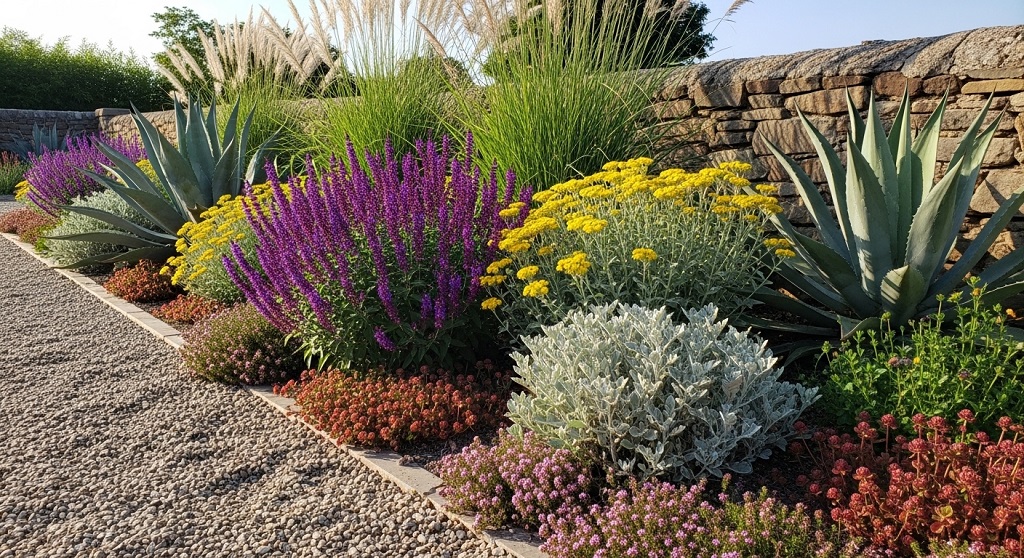
Answer Block: Yes, drought-tolerant borders remain colorful by combining long-flowering perennials, silver-leaf foliage plants, ornamental grasses, and structural shrubs that provide seasonal contrast without requiring frequent watering.
Many gardeners assume drought-resistant borders look dry or minimal.
This misconception comes from poor plant selection rather than design limitations.
Use contrasting textures to maintain visual interest:
- Spiky salvia with soft grasses
- Silver foliage beside purple flowers
- Compact shrubs behind trailing groundcovers
- Evergreens mixed with seasonal bloomers
Layered planting ensures color continuity from early summer through autumn.
Pollinator-friendly species also increase movement and biodiversity.
Conclusion: How Do You Build a Border That Survives Every Summer?
Creating a drought-tolerant garden border is not about limiting plant choices. It is about designing smarter systems that store water efficiently and protect roots from heat stress.
Start with soil preparation. Choose deep-rooted plants. Apply mulch correctly. Group species strategically. Water deeply but less often.
These steps transform fragile borders into resilient landscapes that improve each season.
The result is a garden that stays structured, colorful, and low-maintenance even during long dry summers.
Begin by selecting three drought-tolerant plants and redesign one border section this week. Small changes create lasting resilience.
Frequently Asked Questions
Which flowers survive extreme summer heat without watering?
Lavender, echinacea, salvia, yarrow, and sedum tolerate extreme summer heat because they develop deep root systems and conserve moisture efficiently. These plants maintain flowering performance even when irrigation is limited.
How deep should mulch be in a drought-tolerant border?
Mulch should be applied at a depth of 5–8 cm to reduce evaporation and regulate soil temperature. Thinner layers lose effectiveness, while thicker layers may restrict airflow around plant roots.
Can drought-resistant borders grow in clay soil?
Yes, drought-resistant borders grow successfully in clay soil if compost and grit are added to improve drainage. Soil preparation allows roots to penetrate deeper and access stored moisture.
Do drought-tolerant plants require fertilizer?
Most drought-tolerant plants require minimal fertilizer because excessive nutrients encourage soft growth that increases water demand. Compost improves soil naturally without overstimulating foliage.
How long does it take a drought-tolerant border to establish?
Most drought-tolerant borders establish within one growing season. During this time, roots expand deeper into the soil, improving resilience against summer heat and reducing irrigation needs.
Is gravel better than bark mulch for dry gardens?
Gravel works better for Mediterranean plants that prefer excellent drainage, while bark mulch suits mixed perennial borders needing higher moisture retention. Choosing the correct mulch depends on plant type.
Can drought-tolerant borders support pollinators?
Yes, drought-tolerant borders support pollinators by including flowering species like salvia, echinacea, and lavender that provide nectar throughout summer while requiring minimal watering.
Read More Also: How to choose keystone plants that will transform your yard into a wildlife sanctuary