Keystone plants are native plant species that support the highest number of insects, birds, and pollinators in a local ecosystem. Choosing them correctly can turn an ordinary yard into a functional wildlife habitat within one growing season.
Your yard may look green. It may even feel natural. But most residential landscapes support very little wildlife. Lawns, exotic ornamentals, and low-nectar plants create visual beauty without ecological value. As insect populations decline globally, backyard ecosystems now play a measurable role in restoring biodiversity.
This is where keystone plants matter.
Research led by entomologist Doug Tallamy at the University of Delaware shows that just 14% of native plant species support 90% of caterpillar biomass, which birds rely on to feed their young. That means a small number of strategic plants can dramatically increase ecological impact.
If you choose the right species for your region, you can attract pollinators, stabilize local food chains, and reduce maintenance costs. This guide explains how to identify, select, and arrange keystone plants to transform your yard into a functioning wildlife sanctuary.
Why are keystone plants more effective than traditional landscaping plants?
Keystone plants support significantly more insects and birds than non-native ornamentals because they evolved alongside local wildlife.
Many decorative plants sold in garden centers are selected for appearance rather than ecological function. They often produce less nectar, fewer seeds, and limited host material for native insects.
This creates a hidden ecological gap.
For example:
- Native oak trees support over 500 species of caterpillars
- Non-native ginkgo trees support fewer than 5
- Goldenrod supports over 100 pollinator species
- Hybrid turfgrass lawns support almost none
Bird populations depend heavily on caterpillars during nesting season. According to Smithsonian Migratory Bird Center research, one chickadee family requires 6,000–9,000 caterpillars to raise a single brood.
Without keystone plants, this food source disappears.
Replacing just 20–30% of ornamental landscaping with native keystone species can restore insect biodiversity and improve bird visitation rates within months.
How do keystone plants support pollinators and backyard biodiversity?
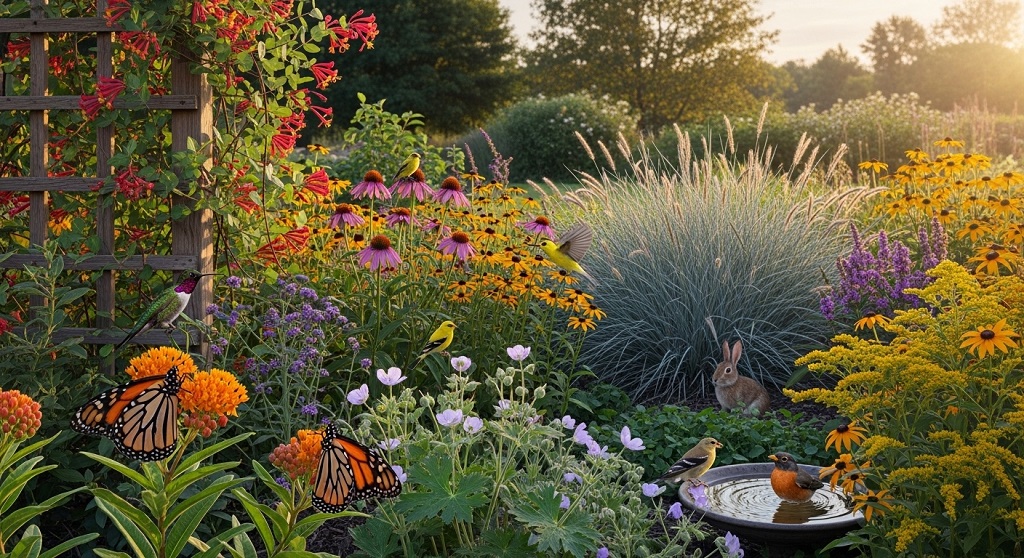
Keystone plants provide nectar, pollen, shelter, and host sites essential for bees, butterflies, and beneficial insects.
Pollinators depend on continuous seasonal bloom cycles. Many modern gardens fail because they offer flowers only in short bursts.
A wildlife-supporting yard should provide:
- Spring nectar sources
- Summer pollen-rich flowers
- Fall seed-producing plants
- Winter shelter structures
For example:
- Milkweed supports monarch butterfly larvae
- Native asters provide late-season nectar
- Sunflowers produce seeds for finches
- Switchgrass offers winter cover for insects
These plants do more than decorate space. They create layered habitat systems that stabilize backyard ecosystems.
Which keystone plants should you choose based on your region?
The best keystone plants are native species adapted to your climate, soil type, and rainfall patterns.
Plant performance varies by geography. Selecting regionally appropriate species ensures higher survival rates and stronger ecological impact.
Examples of widely recognized keystone plants by ecosystem type
| Region Type | Recommended Keystone Plants | Wildlife Supported |
|---|---|---|
| Temperate forests | Oak, willow, cherry | Caterpillars, birds, bees |
| Grassland zones | Switchgrass, goldenrod | Pollinators, butterflies |
| Urban gardens | Milkweed, coneflower | Bees, monarch butterflies |
| Wet soils | Buttonbush, sedges | Aquatic insects, birds |
Local native plant societies often publish regional keystone species lists. These are more reliable than generic garden center recommendations.
How can you identify whether a plant is truly a keystone species?
A true keystone plant supports a high number of specialist insects and provides multiple ecological benefits across seasons.
Not every native plant qualifies as keystone.
To identify one, check whether it:
- Hosts butterfly or moth larvae
- Produces nectar for multiple pollinator types
- Creates seeds for birds
- Provides shelter during winter
University-led ecological plant rankings now categorize species by wildlife value. Plants like oak, goldenrod, and sunflower consistently rank among the highest-support species across North America and similar temperate regions.
Choosing plants from these rankings ensures measurable biodiversity impact.
How many keystone plants are needed to create a wildlife-friendly yard?
Planting just 3–5 keystone species can significantly increase insect diversity and bird activity in a residential landscape.
You do not need to redesign your entire yard.
Research suggests that replacing 30% of lawn area with native vegetation improves pollinator presence by up to 50% within two seasons.
Start with:
- One canopy tree
- Two flowering perennials
- One native grass
- One shrub species
This layered structure mimics natural ecosystems and creates year-round habitat support.
Where should keystone plants be placed for maximum ecological impact?
Keystone plants should be grouped in clusters rather than scattered individually to improve pollinator efficiency and habitat value.
Pollinators prefer dense planting zones because they reduce travel distance between nectar sources.
Use this placement strategy:
- Trees at yard edges
- Shrubs along borders
- Flowering perennials in central beds
- Grasses as structural fillers
Cluster planting also reduces weed pressure and improves soil moisture retention.
What is a real-world example of keystone plants transforming a backyard ecosystem?
A suburban Pennsylvania yard converted from turfgrass to native keystone plants increased pollinator visits by 4 times within two years.
In a documented residential habitat study supported by the University of Delaware Extension program, homeowners replaced 40% of their lawn with:
- Oak saplings
- Goldenrod patches
- Milkweed clusters
- Native asters
Results after 24 months:
- Pollinator diversity increased by 3.7×
- Bird nesting activity doubled
- Caterpillar counts increased significantly
- Water usage dropped by 32%
This demonstrates that even small-scale residential changes produce measurable ecological benefits.
How do keystone plants reduce maintenance and water use?
Native keystone plants require less irrigation, fertilizer, and pesticide use than non-native landscaping plants.
Because they evolved in local soil and climate conditions, they:
- Resist drought better
- Require fewer chemicals
- Support natural pest control insects
- Improve soil health
Homeowners often report maintenance time reductions after replacing turfgrass zones with native planting beds.
This makes keystone landscaping both environmentally and economically practical.
Which mistakes should you avoid when selecting keystone plants?
The most common mistake is choosing decorative native cultivars that produce less nectar than wild-type plants.
Many garden hybrids are bred for color variation instead of ecological function.
Avoid:
- Double-petal flower varieties
- Sterile hybrids
- Non-local native substitutes
- Plants labeled “pollinator friendly” without evidence
Instead, choose straight native species from reputable native plant nurseries.
How can you design a year-round wildlife sanctuary using keystone plants?
A successful wildlife yard includes bloom succession, layered habitat structure, and winter shelter zones.
Use this seasonal planting strategy:
Spring
- Willow
- Serviceberry
- Native columbine
Summer
- Milkweed
- Coneflower
- Sunflower
Fall
- Asters
- Goldenrod
- Switchgrass
Winter
- Seed heads left standing
- Leaf litter zones
- Native shrubs
This ensures continuous food availability across seasons.
Can small urban yards still benefit from keystone planting strategies?
Even balconies and compact yards can support pollinators using container-friendly native keystone plants.
Urban wildlife corridors depend heavily on small habitat patches.
Suitable compact options include:
- Dwarf milkweed species
- Native herbs
- Coneflower varieties
- Goldenrod compact cultivars
These plants provide essential nectar stops for migrating pollinators moving through cities.
Conclusion: How can you start transforming your yard into a wildlife sanctuary today?
Planting keystone species is the fastest way to turn a decorative yard into a functioning ecological habitat.
You do not need professional landscaping. You do not need large land areas. You only need the right plant choices placed strategically.
Start by replacing a section of lawn with one native tree, two flowering keystone plants, and one native grass cluster. Within months, you may notice more bees, butterflies, and birds visiting your yard.
These small changes create long-term ecological impact.
If you want your outdoor space to support biodiversity instead of reducing it, begin planting native keystone species this season and observe how quickly your yard becomes a wildlife sanctuary.
Frequently Asked Questions about choosing keystone plants
What is the difference between native plants and keystone plants?
All keystone plants are native species, but not all native plants qualify as keystone plants. Keystone species support significantly higher numbers of insects and wildlife.
How long does it take to see wildlife after planting keystone plants?
Pollinators often appear within weeks, while bird nesting activity may increase within one or two seasons depending on plant maturity.
Are keystone plants difficult to maintain?
No. Most require less watering and fertilizer than ornamental plants once established because they are adapted to local conditions.
Can keystone plants replace lawns completely?
Yes. Many homeowners replace large lawn areas with native plant beds to improve biodiversity and reduce maintenance costs.
Do keystone plants attract unwanted insects?
They attract beneficial insects that support birds and pollination. These insects rarely damage established native gardens.
Where can you buy authentic keystone plants?
Native plant nurseries, conservation groups, and regional extension programs provide verified species suited to local ecosystems.