Summer heat can turn a forgotten pile of grass clippings into a steaming, productive compost heap — or it can bake a dry, stagnant mound that hardly breaks down at all. The difference usually comes down to a few manageable factors: moisture, aeration, particle size, and the balance of greens to browns. Warm weather gives you a real advantage because microbial activity accelerates as temperatures rise, but that same heat also dries out piles quickly and can push them past the point where beneficial organisms thrive. Many gardeners using a tumbler in hot, humid climates, According to The Village Gardener, find that small adjustments to turning and moisture make a noticeable difference in how quickly finished compost appears. This guide covers what actually speeds up decomposition when the thermometer climbs.
Quick Answer
To make compost faster in warm weather, keep the pile as moist as a wrung-out sponge, turn it every two to three days to reintroduce oxygen, chop materials into smaller pieces, and maintain roughly two to three parts browns to one part greens. Heat accelerates microbial activity, but only when moisture and oxygen are present. Without regular turning and watering, a hot-weather pile stalls within days.
Key Takeaways
- Warm temperatures speed up decomposition only when moisture and oxygen are both adequate; heat alone is not enough.
- Turning every two to three days during hot weather is the single most effective way to keep a pile in its active, fast-decomposing phase.
- Chop or shred materials before adding them — smaller particles decompose significantly faster than whole leaves or large stalks.
- Watch for the pile drying out in summer heat; check moisture at the center, not just the surface.
- Finished compost can appear in as little as three to eight weeks in warm conditions with active management, compared to several months in cool weather.
Why Warm Weather Changes the Composting Equation
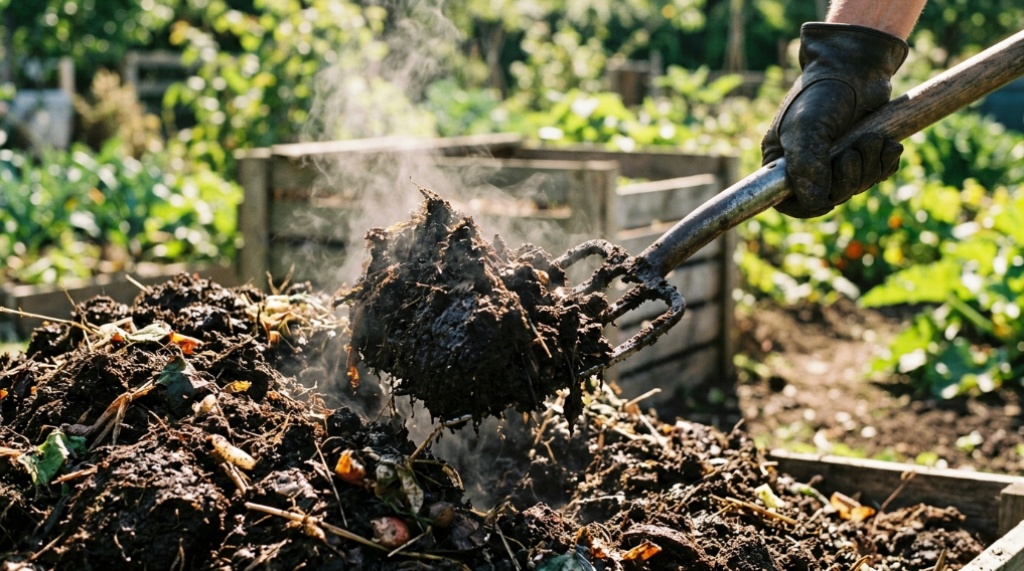
Composting is driven by microorganisms — bacteria, fungi, and other decomposers — that break down organic matter. Their activity is temperature-dependent. When the surrounding air is warm, the pile itself can reach internal temperatures of 130°F to 160°F (55°C to 70°C) during the active phase, and those temperatures accelerate chemical and biological breakdown.
But warmth cuts both ways. A hot pile loses moisture quickly through evaporation, especially on windy days. When the center dries below roughly 40 to 50 percent moisture, microbial activity slows dramatically even though the air is warm. Similarly, a pile that is not turned becomes anaerobic in the center within a few days, which slows decomposition and produces unpleasant odors.
The practical takeaway: warm weather gives you a head start, but you have to manage the pile more actively than you would in spring or fall, If you are looking to gather seasonal yields for your garden bins or manage your crops efficiently, learn how to harvest in stardew valley.
The Four Factors That Actually Control Composting Speed
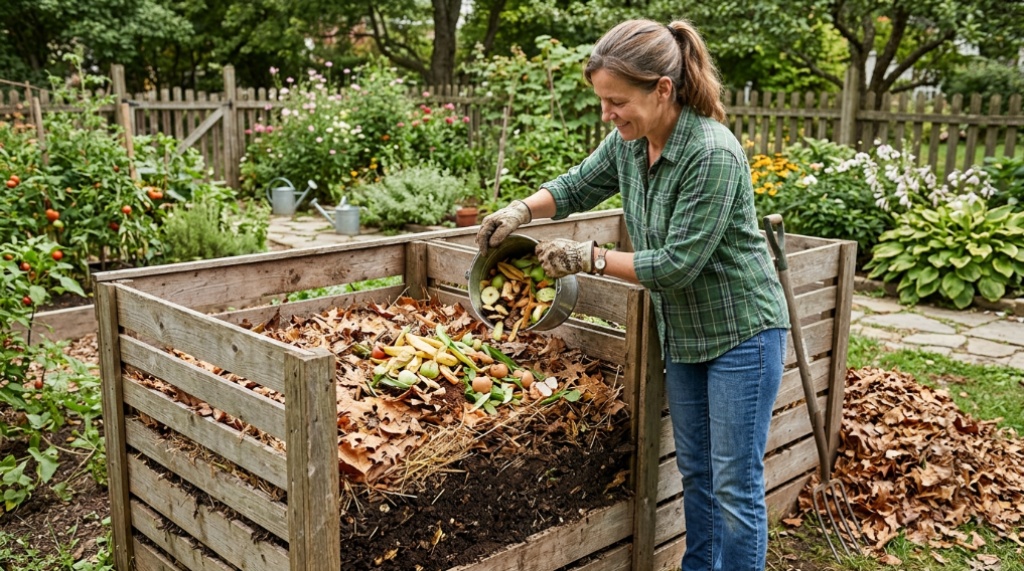
Four variables determine how quickly organic matter breaks down. In warm weather, all four become more sensitive to neglect.
1. Moisture
The ideal moisture content is often described as “wrung-out sponge” — damp but not dripping. Practically, you should be able to squeeze a handful of material and see a few drops of water, but not a stream. In summer, check moisture every two days and add water when the center feels dry. A slow soak with a hose or watering can works better than a quick spray, which only wets the surface.
2. Oxygen
Aerobic bacteria — the fast, odor-free decomposers — need oxygen. Turning the pile introduces fresh air into the center, where oxygen is consumed most rapidly. In warm weather, oxygen depletion happens faster, so turning frequency should increase. Every two to three days is a reasonable starting point for an actively managed pile.
3. Carbon-to-Nitrogen Ratio
The commonly cited target is roughly 25:1 to 30:1 carbon to nitrogen. In practice, most gardeners approximate this by mixing two to three parts “browns” (dry leaves, straw, cardboard, wood chips) with one part “greens” (grass clippings, kitchen scraps, coffee grounds, fresh plant trimmings). Too many greens in hot weather can create a slimy, smelly pile; too many browns slow everything down.
4. Particle Size
Smaller pieces have more surface area for microorganisms to colonize. Shredding leaves, chopping vegetable scraps, and tearing cardboard into small pieces can noticeably shorten decomposition time. This is one of the most overlooked factors — a pile of whole leaves will sit for months even in perfect conditions.
Step-by-Step: A Hot-Weather Composting Routine
A simple routine keeps the pile active without turning composting into a daily chore.
- Add materials in thin layers. Alternate greens and browns rather than dumping a large batch of one type at once.
- Chop as you go. Keep a pair of pruners or a small chipper nearby for stalks, branches, and cardboard.
- Turn every two to three days. Use a pitchfork, compost aerator, or tumbling bin. Move the outer material to the center and the center to the outside.
- Check moisture each time you turn. Squeeze a handful from the center. Add water if it crumbles; add browns if it drips.
- Watch the temperature. A compost thermometer is useful but optional. If the pile feels hot to the touch in the center, it is active. If it cools and stays cool, something is missing — usually moisture or nitrogen.
- Harvest finished compost from the bottom or side. In warm weather, the lower portion of a pile often finishes before the top.
Tumbler vs. Open Pile: Which Speeds Up Composting in Heat?
Both approaches work, but they behave differently in warm weather.
| Factor | Tumbler | Open Pile |
|---|---|---|
| Turning effort | Low — crank the bin | Moderate to high — pitchfork work |
| Moisture retention | Better; enclosed design slows evaporation | Poorer; dries out fast in sun and wind |
| Airflow | Depends on ventilation; can go anaerobic if overloaded | Generally good if turned regularly |
| Capacity | Limited; best for small households | Scalable; handles large volumes |
| Heat buildup | Can overheat in direct sun if small | Less likely to overheat, but dries faster |
Tumblers tend to hold moisture better, which helps in hot, dry conditions. Open piles benefit from better natural airflow but require more frequent watering. The right choice depends on your climate, volume, and how much physical effort you want to invest.
Common Mistakes That Slow Down Warm-Weather Composting
Several habits consistently stall a pile that should be decomposing quickly.
- Adding large amounts of grass clippings at once. Clippings mat down, block airflow, and turn slimy. Mix them with browns or let them dry first.
- Letting the pile dry out. In summer, a pile can lose significant moisture in two days. Check the center, not the surface.
- Turning too often. Daily turning can actually cool the pile and interrupt the thermophilic (high-heat) phase. Every two to three days is usually better.
- Adding meat, dairy, or oily foods. These attract pests and slow decomposition in most home systems.
- Ignoring the brown-to-green ratio. A pile that smells like ammonia has too much nitrogen; add browns and turn.
- Leaving the pile in full sun with no cover. A light tarp or lid can reduce evaporation without smothering airflow.
What “Faster” Realistically Looks Like
In ideal warm-weather conditions — proper moisture, frequent turning, balanced materials, and small particle size — finished compost can appear in roughly three to eight weeks. That is a meaningful improvement over the four to twelve months a passively managed pile often takes.
The catch is that “finished” is a judgment call. Compost is ready when it looks like dark, crumbly soil, smells earthy rather than sour, and the original materials are no longer recognizable. If you can still identify banana peels or leaf shapes, it needs more time.
It is also worth noting that not all material breaks down at the same rate. Woody stems, avocado pits, and thick cardboard take longer than grass clippings or kitchen vegetable scraps. Sifting finished compost and returning larger pieces to the active pile is a common practice for keeping harvests clean.
Frequently Asked Questions
How often should I turn compost in hot weather?
Every two to three days is a good baseline for an actively managed pile. If the pile cools down or smells sour, increase frequency. If it stays hot and odor-free, you can stretch to every four days.
Can compost get too hot in summer?
Yes. Piles can exceed 160°F (70°C), which kills many beneficial microorganisms and can even pose a fire risk in extreme cases. Turning the pile to release heat and adding water to moderate temperature helps keep it in the productive range.
Why is my compost pile not heating up even though it is warm outside?
The most common causes are insufficient moisture, too many browns relative to greens, or particle sizes that are too large. Adding a nitrogen source like grass clippings or coffee grounds, watering, and turning usually restarts the process.
Does adding worms speed up composting in warm weather?
Worm composting (vermicomposting) is a separate process that works best in moderate temperatures — generally below 85°F (29°C). In extreme heat, worms can die. For hot-weather composting, thermophilic bacteria are the primary workers.
Should I cover my compost pile in summer?
A light cover — a tarp, lid, or piece of cardboard — can reduce moisture loss from sun and wind. Avoid airtight covers, which block oxygen and cause anaerobic conditions.
How do I know when compost is finished?
Finished compost is dark, crumbly, and smells earthy. The original materials should be largely unrecognizable, and the pile should no longer heat up after turning. If it still heats, it needs more time.
Conclusion
Warm weather is the best ally a compost pile can have — provided you keep moisture and oxygen in balance and manage the carbon-to-nitrogen ratio. Turning every two to three days, chopping materials small, and checking the center for dampness will keep microbial activity high and decomposition moving quickly. Aim for compost in weeks rather than months, but be patient with tougher materials. Start with one change — better moisture monitoring or more frequent turning — and you will likely see the difference within a week.