Scalping, dull blades, and mowing when the grass is soaking wet will damage a lawn faster than almost anything else a homeowner does. In North Carolina, where tall fescue, bermuda, and zoysia all respond differently to heat and drought, the stakes are even higher — the wrong mowing height or timing can turn a thick lawn into a thin, weed-prone one in a single season. That is why more homeowners are switching to battery-powered mowers for NC lawns, which make it easier to mow lightly and often instead of pushing a heavy gas machine through an overgrown yard. Here is how to mow correctly so the grass comes back stronger, not weaker.
Quick Answer
Mow with a sharp blade, cut no more than one-third of the grass blade at a time, and set your height based on grass type — roughly 3 to 4 inches for tall fescue, 1 to 2 inches for bermuda, and 2 to 3 inches for zoysia. Mow when the grass is dry, alternate your mowing direction, and avoid cutting during heat or drought stress. Done consistently, these habits keep roots deep, shade out weeds, and prevent the brown, scalped look that comes from cutting too short.
Key Takeaways
- The one-third rule is the single most important habit: never remove more than a third of the blade height in one pass.
- Mowing height must match grass type — tall fescue needs a taller cut than bermuda or zoysia.
- Dull blades tear grass instead of slicing it, leaving a frayed, brownish tip that invites disease.
- Mowing frequently with a light battery mower causes less stress than occasional deep cuts with a heavy gas mower.
- Alternating direction and avoiding mowing wet or heat-stressed grass prevents ruts, clumping, and scalping.
Why Mowing Technique Matters More Than the Mower
A lawn does not fail because of a cheap mower — it fails because of how the mower is used. Grass is a plant with a crown, roots, and a blade. Every cut removes leaf surface the plant uses for photosynthesis. When too much is removed at once, the plant panics, pulls energy from its roots, and thins out. Correct technique keeps that balance intact, and the mower itself becomes far less important than the hand guiding it.
The One-Third Rule: The Foundation of Healthy Mowing
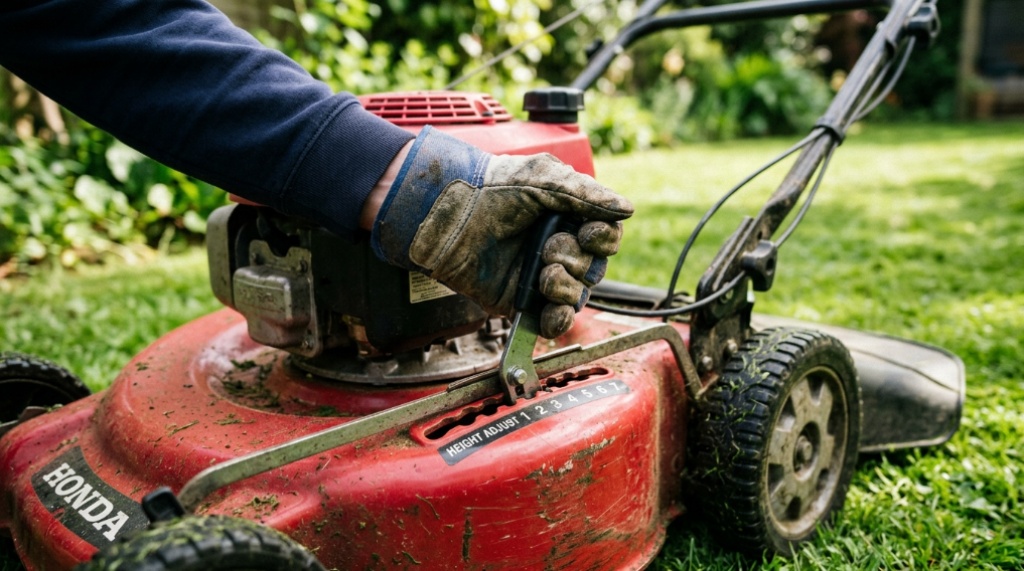
Never cut more than one-third of the total grass blade height in a single mowing. If your tall fescue is 4.5 inches tall and you want it at 3 inches, that is a 1.5-inch cut — fine. But if it is 6 inches and you cut it to 3 inches, you have removed half the blade, which shocks the plant. The fix is simple: mow more often, especially in spring when growth is fastest. In peak NC growing season, that can mean every five to seven days.
What Happens When You Break the Rule
Cutting more than a third at once causes scalping, yellowing tips, and a shallow root system. The grass spends weeks recovering instead of thickening. Weeds — especially crabgrass and dandelions — move into the open sunlight that reaches the soil. Recovering from a scalped lawn takes far longer than simply mowing on schedule, for more helpful tips, check out our guide on how to better maintain your lawn?
Correct Mowing Heights by Grass Type
There is no universal height. Grass species evolved differently, and each has a range where it thrives. Cutting tall fescue like bermuda is one of the most common mistakes in NC lawns.
| Grass Type | Ideal Mowing Height | Notes |
|---|---|---|
| Tall Fescue | 3 to 4 inches | Cool-season grass; taller cut shades soil and suppresses weeds in summer heat. |
| Bermuda | 1 to 2 inches | Warm-season grass; tolerates and even prefers a shorter, more frequent cut. |
| Zoysia | 2 to 3 inches | Dense and slow-growing; too short a cut invites thatch and scalping. |
| Centipede | 1.5 to 2 inches | Low-maintenance warm-season grass; scalps easily if cut too short. |
In summer, raise the cutting height slightly for cool-season grasses. Taller blades shade the soil, keep roots cooler, and reduce water loss during NC’s humid, high-heat stretches. In the last mowing of fall, drop back to the normal range so the lawn enters winter at a healthy length.
When to Mow — and When Not To
Timing matters almost as much as height. The best time to mow is mid-morning to late afternoon on a dry day. Mowing wet grass clumps the clippings, clogs the deck, and tears the blades instead of cutting them. Early morning dew and evening moisture both create the same problem.
Avoid mowing when the lawn is heat- or drought-stressed. If grass blades are wilting, folding, or turning brown, mowing will only add stress. Wait for rain or irrigation to revive it. Similarly, do not mow immediately after fertilizing or applying weed control — give the product time to work. And never mow a lawn that has just been treated for a fungal disease, since clippings can spread spores.
Blade Sharpness: The Most Overlooked Factor
A dull blade tears grass rather than slicing it cleanly. Torn tips dry out, turn brown, and create an open wound where fungus and disease can enter. A sharp blade leaves a clean cut that heals quickly. Sharpen the blade every 20 to 25 hours of mowing, or at least once per season — more often if you mow sandy or rocky soil. This is one of the fastest, cheapest ways to improve lawn appearance, and it is easy to forget.
Alternating Direction and Clipping Management
Mow in a different direction each time. Grass leans in the direction it is repeatedly cut, and mowing the same way every week creates ruts, compacts soil, and causes uneven growth. A simple rotation — north-south one week, east-west the next — keeps blades upright and the lawn looking even.
Leave the clippings on the lawn when you mow frequently. Grass clippings break down quickly and return nitrogen and moisture to the soil, reducing fertilizer needs. Only bag clippings when the grass is overgrown, wet, or diseased. If a thick layer of clippings is left after a heavy cut, rake it out so it does not smother the grass beneath.
Common Mowing Mistakes to Avoid
- Cutting too short “so it doesn’t need mowing as often” — this backfires by weakening the lawn.
- Mowing with a dull blade and assuming the brown tips are disease.
- Mowing wet grass and leaving clumps that kill the grass underneath.
- Skipping weeks and then cutting deep to “catch up.”
- Mowing in the same direction every time.
- Ignoring seasonal height adjustments between spring, summer, and fall.
How Battery-Powered Mowers Fit Into a Correct Mowing Routine
Correct mowing depends on frequency, not power. A lighter, quieter battery mower makes it easier to mow twice a week during peak growth instead of dreading a heavy gas machine once every ten days. In North Carolina’s summer heat, being able to finish the job quickly — without exhaust, refueling, or a pull cord — means homeowners actually stick to the schedule that keeps grass healthy. Cool-season fescue in the Piedmont and warm-season bermuda in the coastal plain both respond best to consistent, light cuts, which is exactly what these mowers are designed for.
Frequently Asked Questions
How often should I mow my lawn in North Carolina?
It depends on growth rate, not the calendar. In spring and early summer, tall fescue may need mowing every five to seven days. In midsummer heat or winter dormancy, every two to three weeks may be enough. Follow the one-third rule rather than a fixed schedule.
Is it bad to mow grass when it is wet?
Yes. Wet grass clumps, clogs the mower deck, and tears rather than cuts cleanly. It also increases the risk of slipping and spreading fungal disease. Wait until the lawn is dry, ideally mid-morning to afternoon.
What happens if I cut my grass too short?
Scalping removes too much leaf surface, forcing the plant to draw on root reserves. The result is a shallow root system, yellowing, and open soil where weeds move in. Recovery takes weeks and often requires reseeding.
Should I bag or mulch my grass clippings?
Leave them on the lawn if you mow frequently and the clippings are small. They decompose and return nutrients. Bag them if the grass was overgrown, wet, or diseased, since clumps can smother the lawn.
Can I mow my lawn in the same direction every week?
You can, but you should not. Repeatedly mowing the same way compacts soil, creates ruts, and trains grass to lean in one direction. Alternate direction each mowing for a healthier, more even lawn.
When should I sharpen my mower blade?
Every 20 to 25 hours of use, or at least once per mowing season. A sharp blade cuts cleanly; a dull one tears grass and leaves brown, frayed tips that invite disease. Sharpen more often in sandy soil.
Conclusion
Healthy mowing comes down to three things: sharp blades, the right height for your grass type, and never removing more than a third of the blade at once. Add consistent timing, dry conditions, and a rotating direction, and your lawn will thicken, crowd out weeds, and handle NC heat far better. Pick a mowing day, stick with it, and adjust height with the seasons rather than mowing on autopilot.